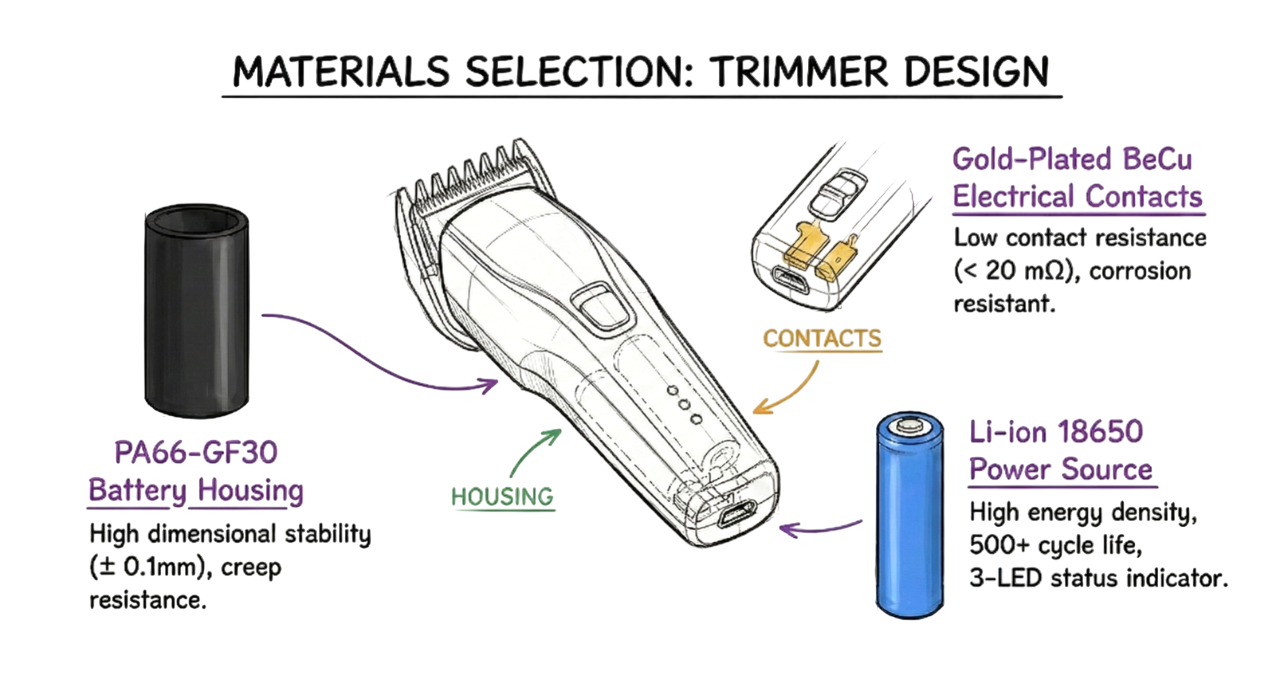
Trimmer Redesign

The Problem
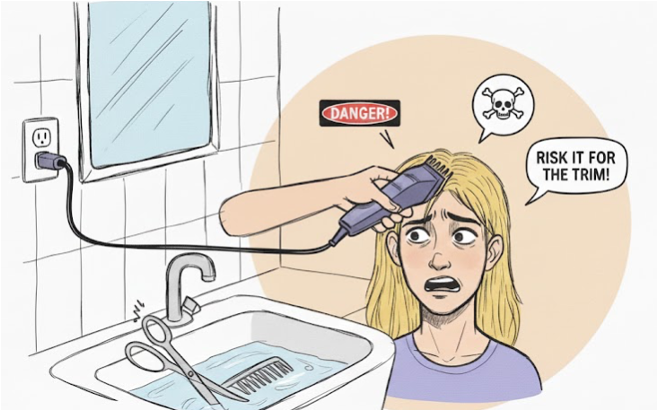
Core Challenge
How might we give users the freedom of cordless operation while maintaining the reliability of always-available power? Users shouldn't have to choose between convenience and dependability.
Technical Specs
Key Features
Modular Battery System
Quick-swap battery design allows users to replace batteries without interrupting grooming sessions.
Auto Power Switching
Seamlessly switches between battery and cord power when plugged in—never run out mid-use.
LED Charge Indicators
Clear visual feedback on battery status so users always know their charge level.
Tool-Free Attachment
Easy-snap accessories for different grooming needs without fumbling with small parts.
Design Process
Requirements Definition
Translated user needs into measurable engineering requirements using QFD methodology.
Concept Generation
Generated multiple concepts and evaluated based on feasibility, user value, and manufacturing cost.
Prototyping & Testing
Created low-fidelity ergonomics prototypes. User testing validated the hybrid power concept.
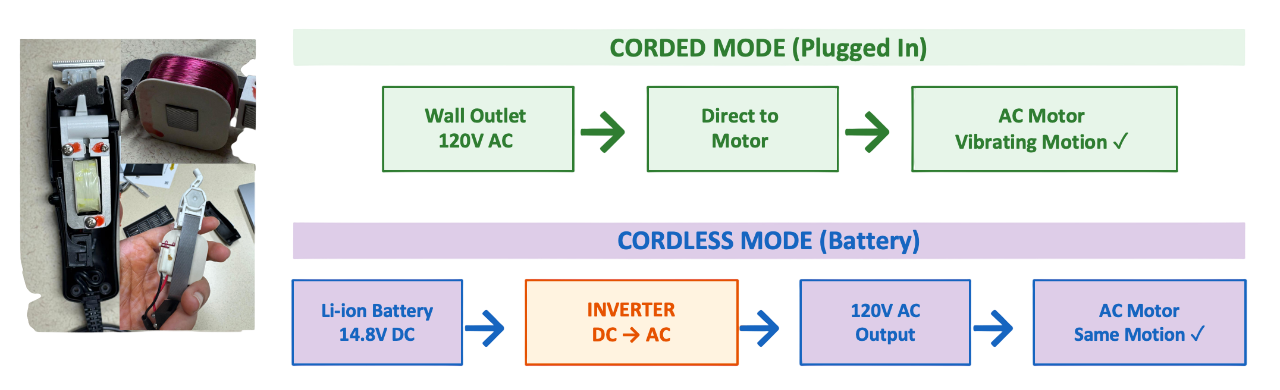
Engineering Insight
The best engineering solutions often come from reframing the problem. Instead of choosing between 'corded' or 'cordless,' we asked 'how might we provide both?' This hybrid thinking opened new solution spaces.