Capstone· Team Opus Mach @ CMU

StepRight.

Redesigning the pickup tailgate for every body that uses it.
Duration
16 Weeks
Role
Product Manager
Team
6 Members
Context
Team Opus Mach @ CMU
StepRight

What if getting into your truck took only as much effort as opening it?

The Problem
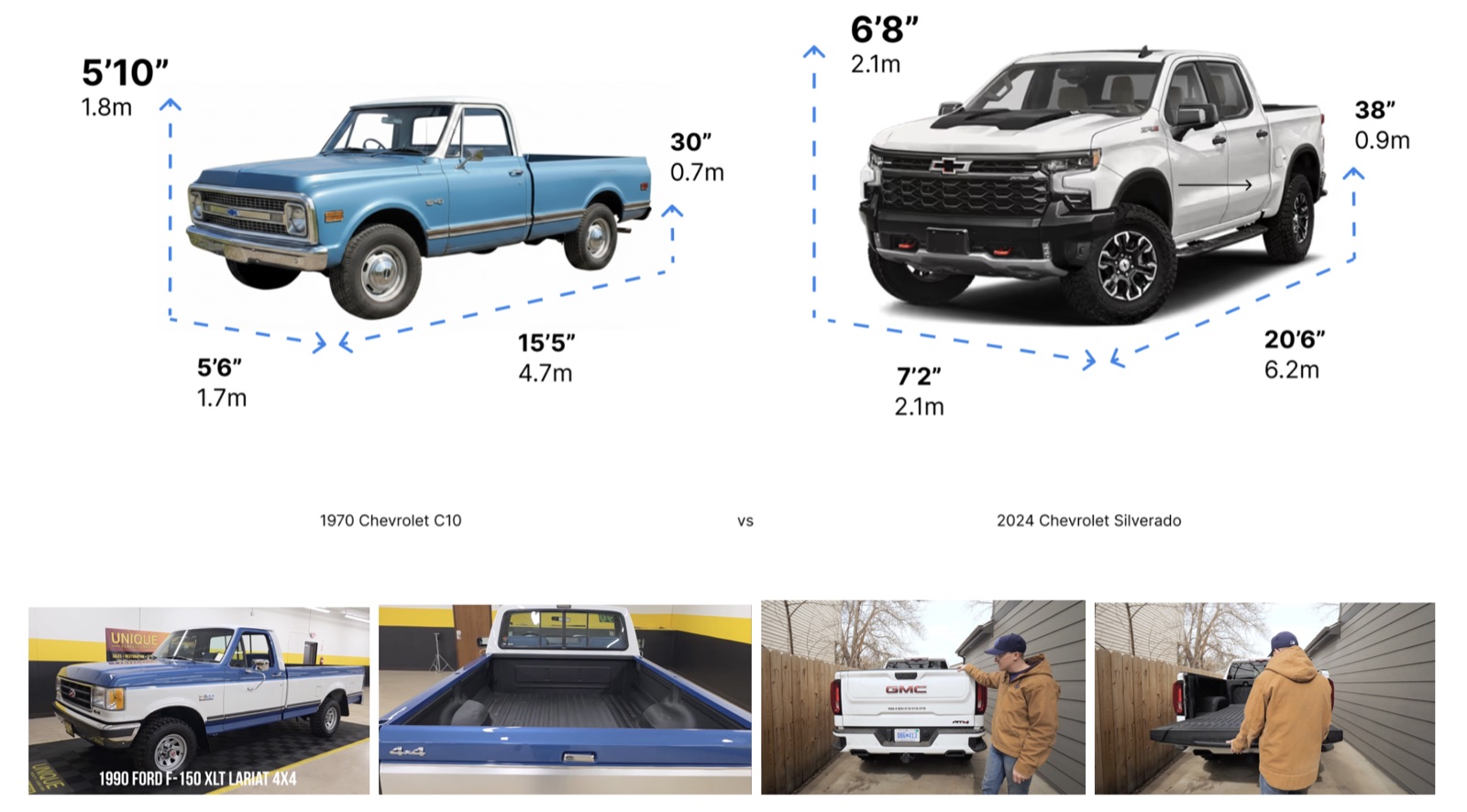
The pickup truck has grown taller, wider, and heavier for four straight decades. What was once a waist-high work vehicle is now a chest-high lifestyle platform, and the tailgate, the single point every user passes through, has not evolved to match. The bed floor of a modern full-size truck starts 34 to 38 inches off the ground. Reaching cargo near the cab means climbing in, and climbing is where every existing solution breaks down. In 80 contextual interviews, we watched users step on rear tires, brace against wheel wells, and lean over bedside rails. Every one of those workarounds gives the user two points of contact with the vehicle. Industrial safety standards have required three for decades. No pickup tailgate on the market meets that bar, and falls while entering or exiting a vehicle account for roughly 147,000 injuries a year, 23 percent of the largest category of non-crash vehicle injuries.
The truck grew for four decades. The human body did not.
80
Contextual interviews
Plus 55 co-design responses from r/trucks
147K
Falls per year
Entering or exiting a vehicle (NHTSA)
3.1×
More step area
Than the closest OEM solution
<5s
To deploy
One button, step and handles together

Who the Tailgate Fails

Today's tailgate step is designed around one archetype: an able-bodied adult around six feet tall who is comfortable climbing. Three growing populations fall outside it. Shorter adults, for whom the tailgate top sits at rib height. Older owners, who are half of new pickup buyers and quietly stop using the front of the bed as climbing gets harder. And children helping load camping gear, who have no safe way in at all. The research surfaced a second, psychological problem: many truck owners would rather risk injury than be seen using something that looks like a mobility aid. Ladders and assistive steps get rejected not because they fail but because of what they seem to say about the person using them.
The Insight

The same feature, framed as a mobility aid, gets rejected. Framed as a capability upgrade, it gets bought. Power running boards won this way. Any solution had to work for every user and read as a premium truck feature, never as an accommodation.
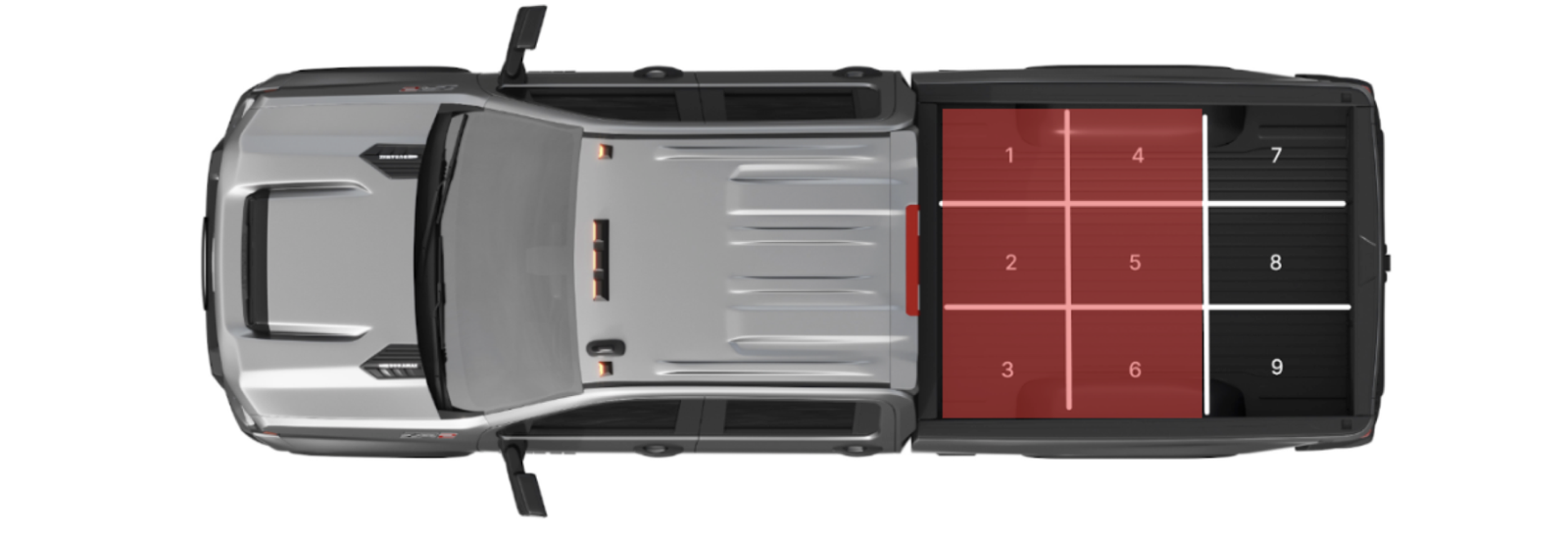
Users store their heaviest cargo in the zones they can reach least easily.

The Solution

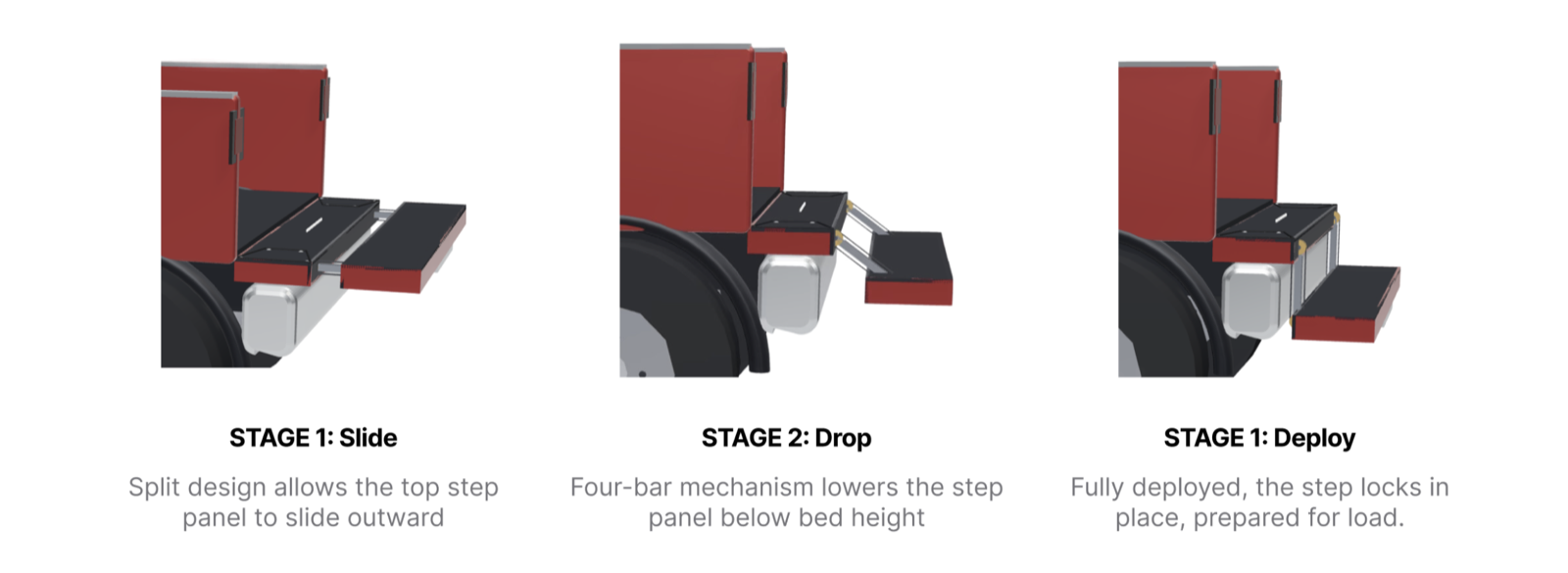
StepRight redesigns the tailgate itself as an integrated access system. A full-width step, 62 inches wide and over 14 inches deep, sized for a full work boot instead of half of one. Two grab handles that deploy with the step and give the user true three-point contact, the piece missing from every tailgate step on the market. One button deploys both in under five seconds; closing the gate stows everything. Stowed, the truck reads as a standard premium pickup: no visible step, no exposed handle, nothing added on. The handle mechanism is purely mechanical, driven by a cam track as the panel folds, so there is no motor to stall and no spring to fatigue. And unlike the closest OEM solution, the step clears a mounted trailer hitch in every configuration.
Slide, drop, deploy: the three-stage sequence behind the single button.

Why It Works for Everyone

A step for a full boot

893 square inches of platform, 3.1 times the closest OEM step, sitting 9 inches lower. Users place their foot without looking down.

The missing handhold

Grab handles at natural grip height for users from 4'9" to 6'4", providing the three-point contact every industrial climbing standard requires.

Invisible until needed

Flush when stowed, deployed by one button, named in the language of trucks. A capability upgrade, not an assistive device.

The Business Case
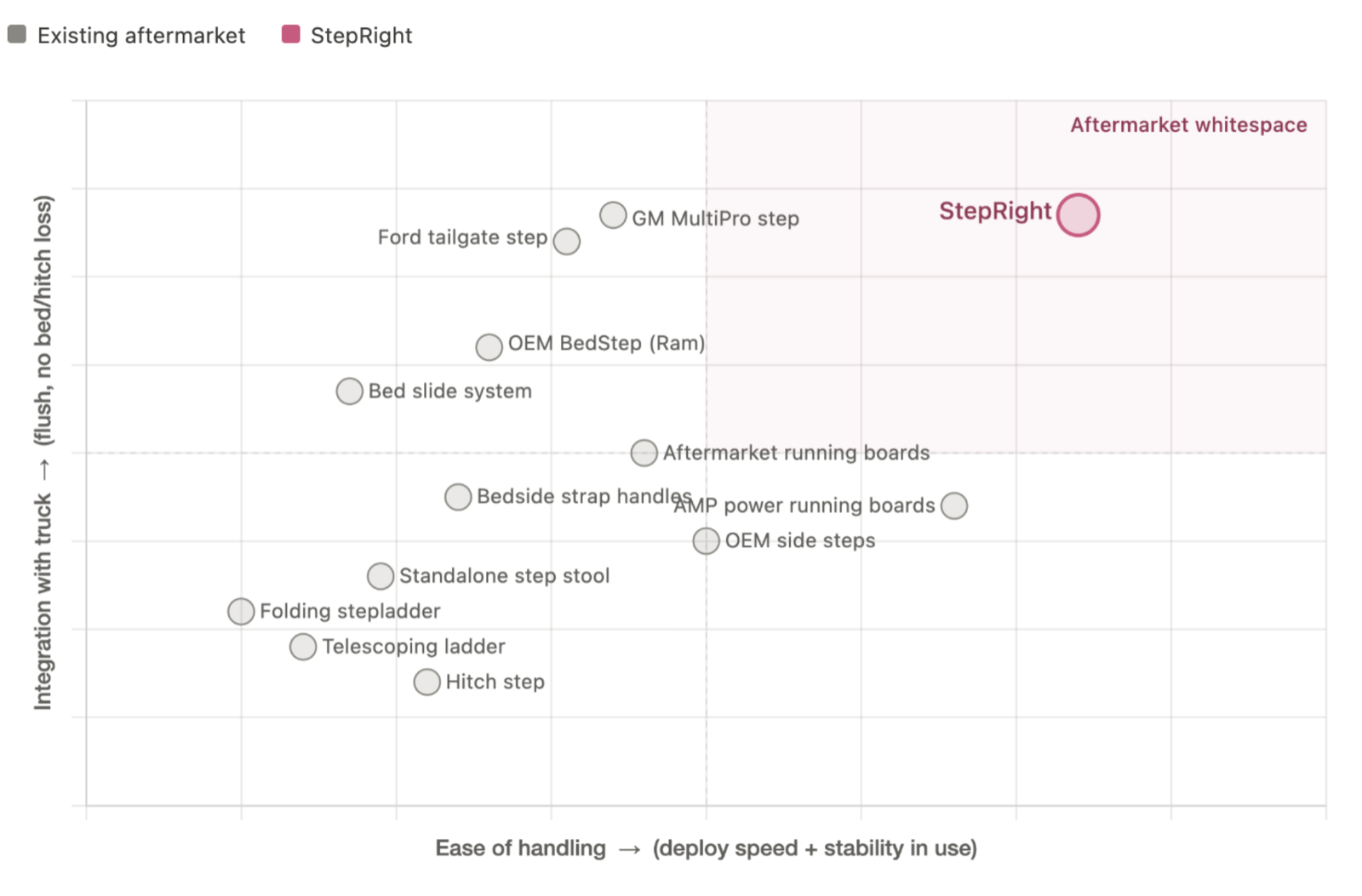
We recommended an aftermarket-first launch built on what our client, Opus Mach, already does well: precision CNC manufacturing and existing relationships with Midwest truck upfitters. Phase one targets independent contractors, the buyers who use their beds most, decide personally, and already spend on their trucks. Priced at $1,500 to $2,300 installed, alongside power running boards rather than accessibility products. Contractor sales generate the revenue, usage data, and injury-reduction evidence that justify each next step: consumer aftermarket in year two, OEM conversations in year three, backed by attach rates instead of a pitch deck. Break-even lands at roughly 12,000 units, inside the second year of the conservative plan.
Existing products solve a piece of the climb. None solve the whole interaction.
Key Learning

Users do not complain about bad design; they adapt to it. The access problem never shows up in surveys or warranty data because owners quietly rearrange their habits around it. We could only find it by watching people, and it taught me to trust observed behavior over anything a customer says in a form.