Meal Planning UX
Executive Summary

Research Hypothesis
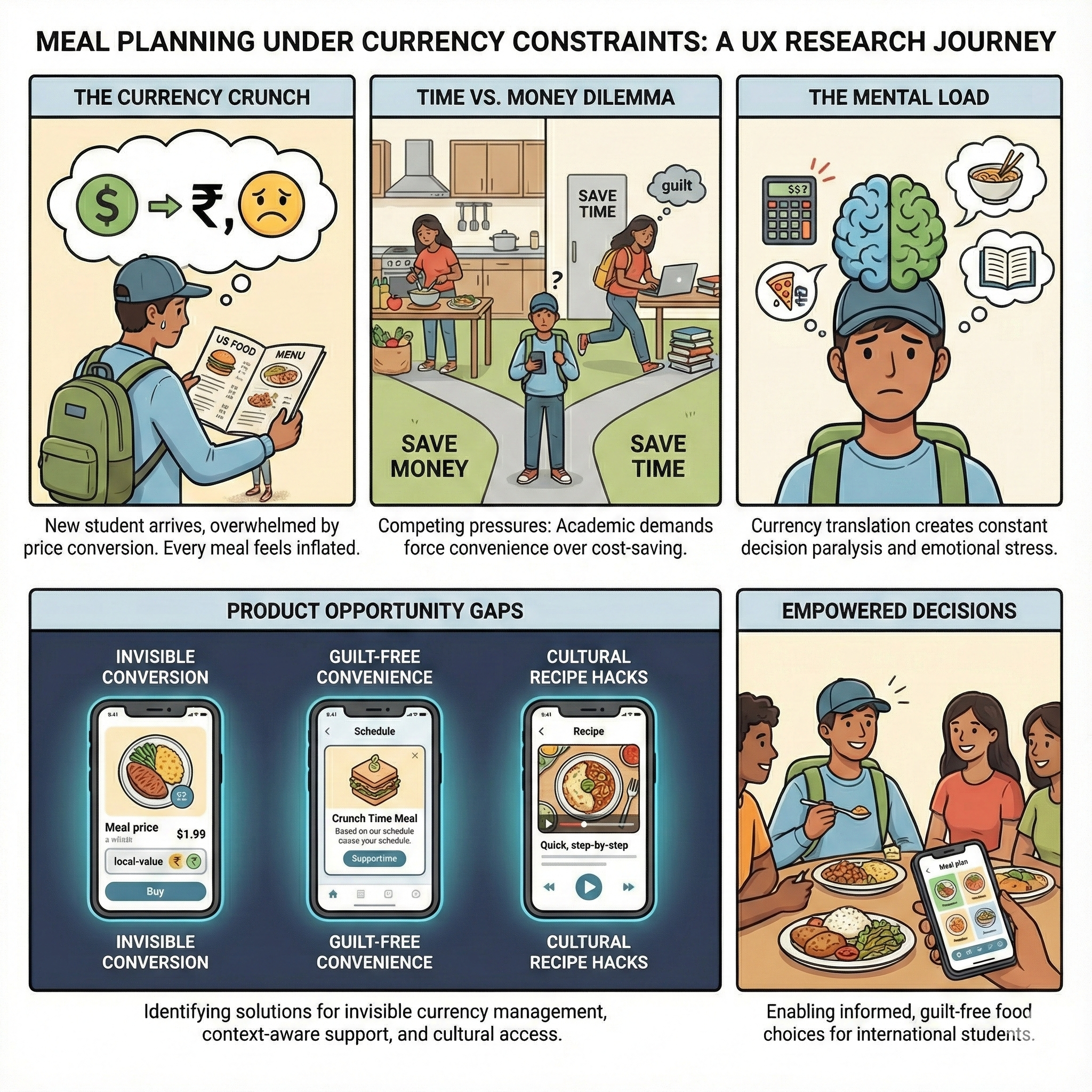
Currency exchange creates a psychological barrier making purchases feel inflated. New international students constantly navigate competing pressures: saving money versus saving time.
Key Insights
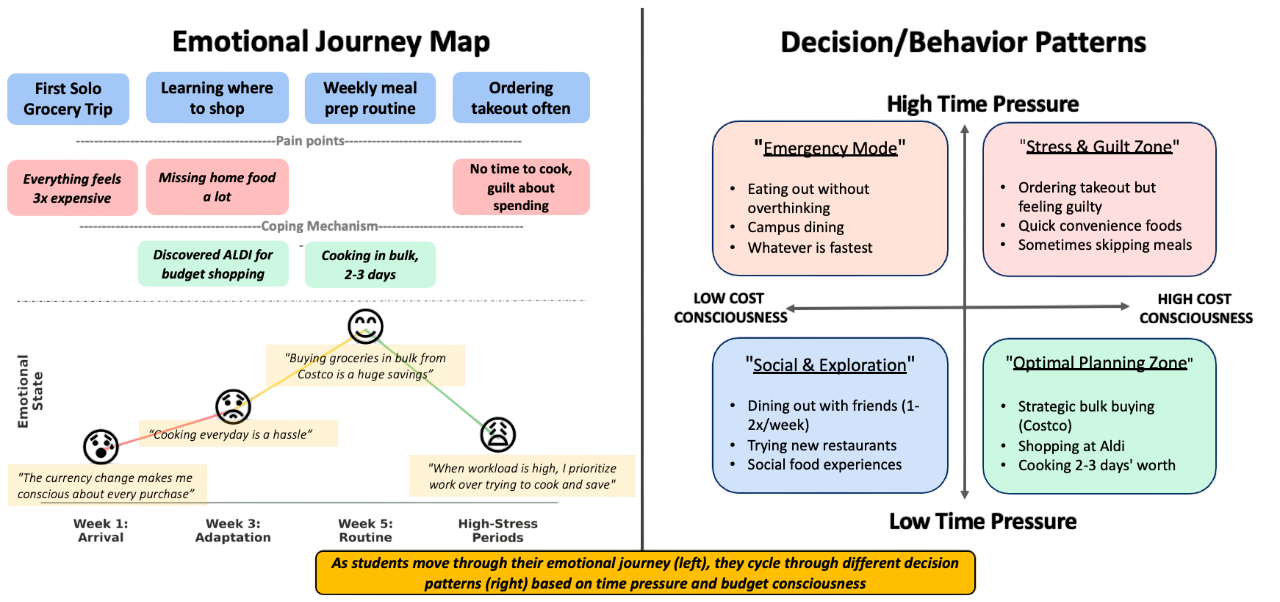
Currency Conscious
Students constantly convert prices to home currency, creating decision paralysis ($5 coffee feels like a fortune).
Missing Home
Affordable delivery systems from home countries are no longer available, creating a convenience gap.
Stress vs. Savings
Academic stress consistently overrides cost-saving intentions, leading to 'convenience spending' guilt.
Strategic Coping
Despite no fixed budgets, students develop specific coping strategies like bulk buying to justify costs.
Product Opportunity Gaps
Mental Load
No tools help reframe local prices. Students need invisible currency management.
Decision Support
No system helps make informed convenience-vs-cost tradeoffs based on workload.
Cultural Access
Lack of connection to affordable cultural food resources and alternatives.
Recipe Hacks
Need for quick, culturally-authentic recipe hacks for novice cooks.
Key Learnings
This research reinforced that financial decisions are deeply emotional. The 'rational' approach of budget tracking fails because it doesn't address the psychological weight of currency conversion. Effective solutions must address emotional needs first.